Cellular Concrete Lift Height: What Determines How Deep You Can Pour?
Most of the United States and Canada use the term “lift height” to indicate the thickness of a layer of placed concrete. But did you know there are pockets in the US where the term “stackability” is used instead of lift height. Apparently these pockets exist throughout the world.
Quite how this came to be is not known and seemingly research linguists care very little about the origins. Is is thought that it has something to do with translation and thinking about wet concrete as being discrete like blocks.
Speculation is that the terms “stackable” and “stackability” were then imported into the US and Canada by immigrants from those areas where the terms were first used.
So, if you want to get a puzzled look from someone, just tell them that “this concrete (or cellular concrete) is stackable to 7 feet or its stackability is 8 feet or pick your own number.
Updated September 22, 2026
How deep can you place cellular concrete in a single lift?
It sounds like a simple question, but there isn’t one lift height that applies to every cellular concrete project.
If you’ve worked with cellular concrete for a while, you may have also heard the term stackability used to describe essentially the same concept. In most of the United States and Canada, lift height is the more common term.
Whatever you call it, the practical question is:
How much cellular concrete can be placed vertically at one time while maintaining the density, stability, and performance required for the project?
The answer depends on the cellular concrete mix, foam quality and stability, density, pumping and production conditions, placement method, and project specifications.
Why Cellular Concrete Lift Height Matters
Cellular concrete gets its lightweight properties from preformed foam introduced into a cementitious slurry. The foam creates small air cells throughout the material, reducing its density and allowing cellular concrete to be used for applications such as void filling, utility trench fill, annular space filling, lightweight fill, and other geotechnical applications.
If you’re new to the material, our Cellular Concrete Basics resource provides a good introduction to how cellular concrete is produced and where it is commonly used.
During placement, cellular concrete near the bottom of a lift must support the weight of the fresh material placed above it. As the lift gets deeper, the material below is subjected to greater pressure. If the cellular structure cannot withstand those conditions, the material may not maintain its intended density and uniformity throughout the placement.
That’s why lift height isn’t simply a number. It needs to be considered as part of the overall cellular concrete production and placement process.
There Is No Universal Maximum Lift Height
It’s not unusual for project specifications to establish maximum lift thicknesses for cellular concrete.
Those requirements may be based on the application, mix design, curing requirements, site conditions, engineering requirements, or previous project experience. They should always be followed.
However, a specified lift height shouldn’t necessarily be interpreted as the physical limit of cellular concrete in every application.
Cellular concrete can behave differently depending on its density, mix design, foam characteristics, production method, pumping conditions, placement geometry, and other project variables.
Rather than asking: What’s the maximum lift height for cellular concrete?
A better question is: How deep can this cellular concrete be placed while still meeting the requirements of this particular project?
What Determines Cellular Concrete Lift Height?
Several factors work together to determine how cellular concrete performs as placement depth increases.
1. Cellular Concrete Density and Mix Design
Cellular concrete can be produced at different densities depending on the project requirements.
A lower-density geotechnical fill may contain a different proportion of slurry and foam than a higher-density mix. Because the material composition changes with density, cellular concrete at one density should not automatically be expected to behave exactly like cellular concrete at another.
Mix design therefore plays an important role when evaluating placement conditions and potential lift heights.
Richway’s Cellular Concrete Mix Design Calculator can help estimate slurry requirements, foam requirements, density, cellular concrete volume, and material quantities before production begins.
2. Foam Quality and Stability
The preformed foam has a demanding job.
It must be generated consistently, introduced into the cementitious slurry, mixed into the material, pumped through the delivery system, discharged at the placement point, and then withstand the conditions created as additional cellular concrete is placed above it.
Maintaining a consistent cellular structure throughout that process is important to maintaining the intended properties of the material.
Foam quality, foam generation, and the characteristics of the cellular concrete all need to work together. Lift height should therefore be considered as part of the entire production system rather than as an isolated placement variable.
3. Pumping and Production Conditions
Cellular concrete may experience considerable stress before it ever reaches the placement.
Hose length, elevation changes, fittings, reductions, restrictions, line pressure, pumping rate, and other production conditions can affect the material as it travels through the system.
A short hose run into an open excavation is very different from pumping cellular concrete hundreds or thousands of feet to a remote placement point.
That doesn’t mean long-distance pumping automatically limits lift height. It means the material arriving at the placement point needs to be evaluated based on the conditions it has actually experienced.
4. Placement Conditions and Project Specifications
Placement geometry matters too.
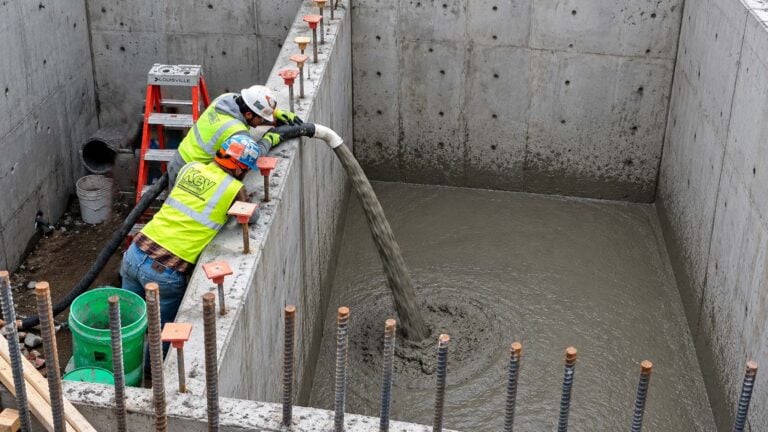
A large open excavation, narrow utility trench, confined void, annular space, and enclosed structure create very different placement conditions.
Containment, venting, placement rate, existing water, structural limitations, and other site conditions may all affect how the material should be placed.
Most importantly, the project specification remains the controlling requirement.
Even if a cellular concrete mix has demonstrated the ability to maintain its properties at greater depths, that doesn’t override an engineered specification establishing a maximum lift thickness.
Watch: How High Can You Place Cellular Concrete in One Lift?
In this 20 More Questions video, Richway discusses lift height and the factors that determine how deeply cellular concrete can be placed.
Why Greater Lift Height Can Matter to Contractors
Lift height isn’t only a technical consideration. It can also affect jobsite productivity.
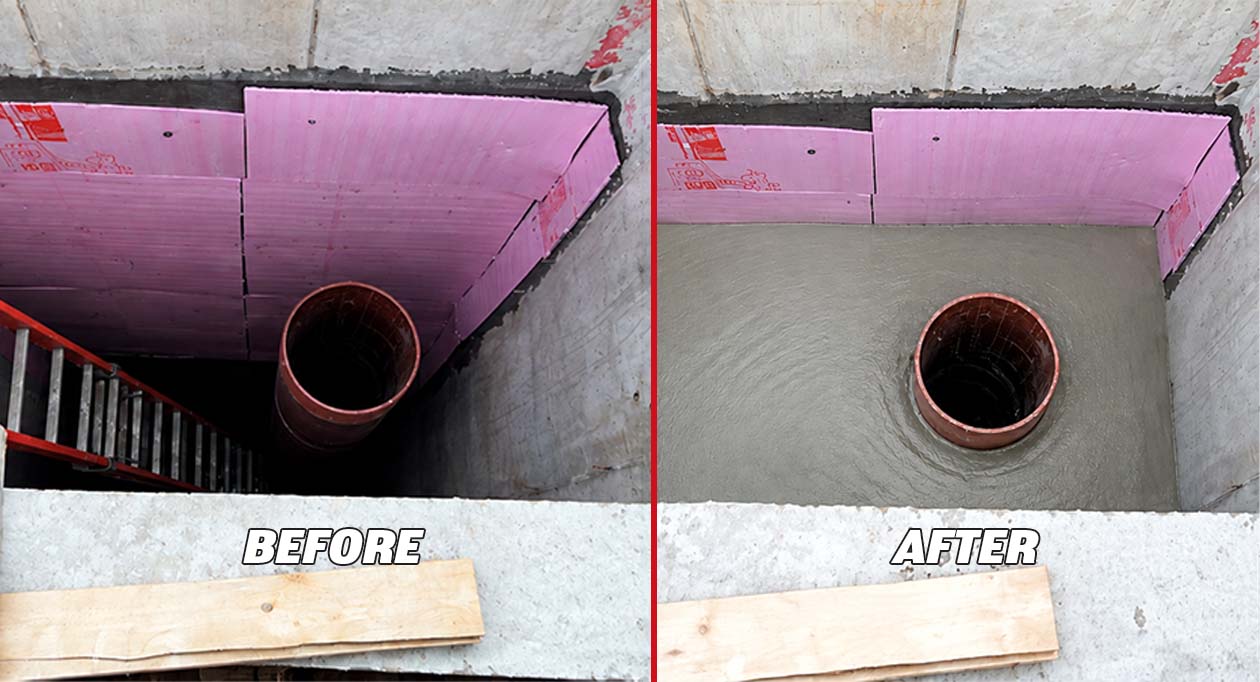
Consider a large-volume void fill.
If the project requires cellular concrete to be placed in relatively shallow lifts, the contractor may need to stop production between lifts before continuing the placement.
On a project involving hundreds or thousands of cubic yards, those interruptions can become a significant part of the production schedule.
If the project specification, mix design, site conditions, and material performance allow greater lift heights, a contractor may be able to place more material during each production cycle.
That can potentially mean:
Fewer placement interruptions
Less waiting between lifts
Better utilization of equipment and labor
Greater daily production
Faster completion of large-volume placements
For a small placement, the difference may not be significant. On a large project, it can be.
But productivity should not come at the expense of material performance.
The objective isn’t simply to place cellular concrete as deeply as possible.
It is to determine how the material can be placed efficiently while continuing to meet the requirements of the project.
Quality Control Matters
Lift height ultimately comes back to quality control.
Operators need to know whether the cellular concrete reaching the placement point is maintaining its intended properties throughout production.
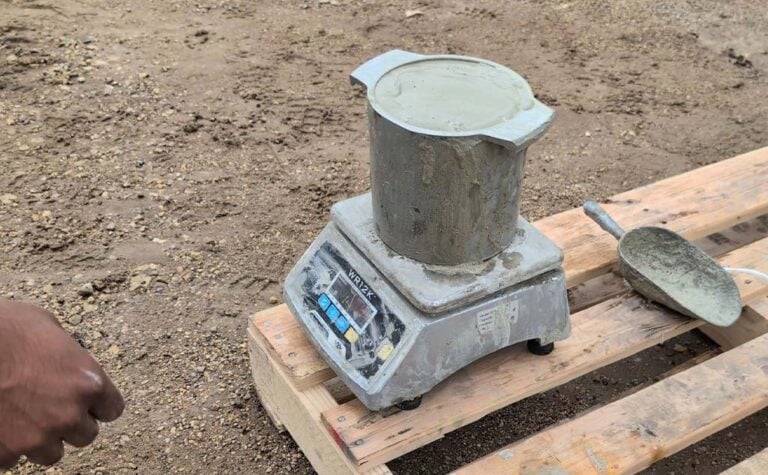
Wet-density testing provides immediate feedback about the material being produced.
If the project calls for approximately 30 PCF cellular concrete, for example, the operator needs to verify the material being placed rather than relying only on machine settings or mix calculations.
Quality control should consider the entire production and placement process, including:
Base slurry consistency
Foam quality
Cellular concrete wet density
Mixing
Pumping conditions
Placement conditions
Production rate
Changes in any part of the process can affect the material being produced.
There isn’t one maximum lift height that applies to every cellular concrete project.
Cellular concrete density, mix design, foam quality and stability, pumping conditions, placement geometry, quality control, and project specifications all play a role.
That’s why cellular concrete should be viewed as a complete production and placement system.
Slurry preparation, foam generation, mixing, pumping, placement, and quality control all need to work together to produce consistent material at the placement point.
Want to learn more about cellular concrete production and placement? Explore Richway’s Cellular Concrete Construction Resources for information on mix design, production, pumping, quality control, equipment, and real-world cellular concrete projects.
Stackability or Lift Height?
So which term should you use?
In most of North America, lift height will probably be understood more readily.
If someone asks about the stackability of cellular concrete, however, they’re generally asking about the same concept: the ability of fresh cellular concrete to support additional material placed above it while maintaining the cellular structure and properties required for the project.
The terminology is less important than understanding what controls the material’s performance.