Beyond the Equipment: Why Contractor Education is the Secret to Successful Lightweight Fill
Bridging the Gap Between Iron and On-Site Success
Buying a high-performance cellular concrete pump is only the first step toward project success. In the geotechnical and civil construction worlds, the stakes are incredibly high. If a crew cannot consistently hit the engineered density on a bridge approach, utility abandonment, or deep fill project, the consequences are devastating, ranging from structural failures to incredibly expensive material tear-outs.
That is why we always say the secret to a profitable, smooth-running cellular concrete job is not just the iron on the trailer. It is the education of the crew operating it.
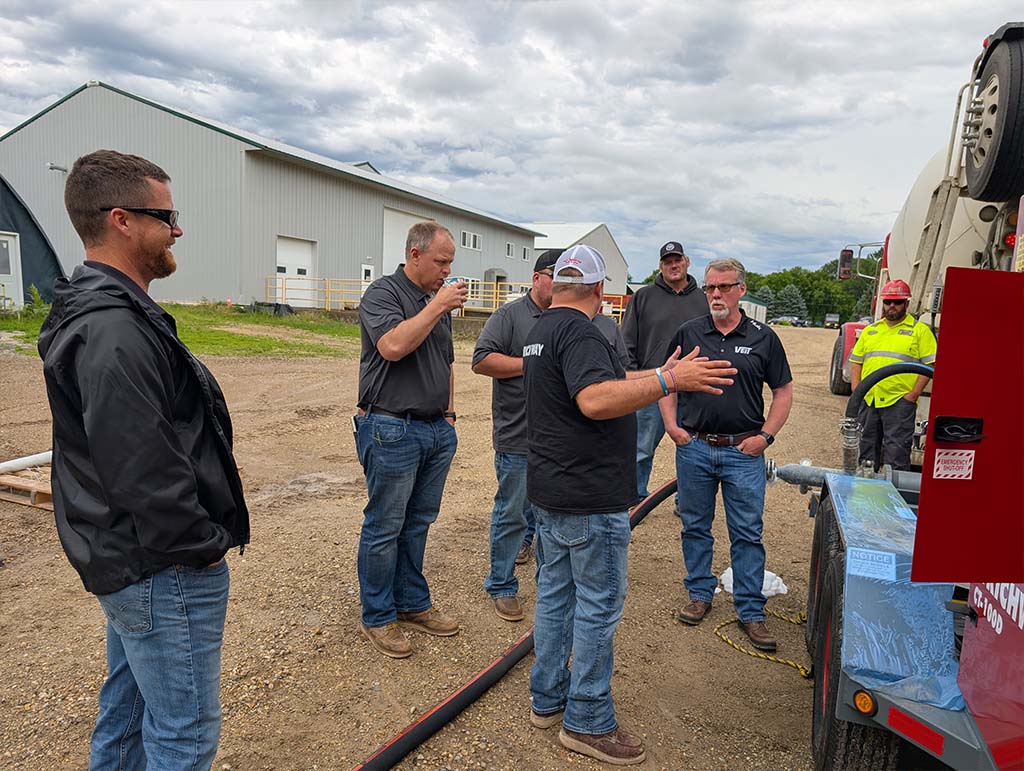
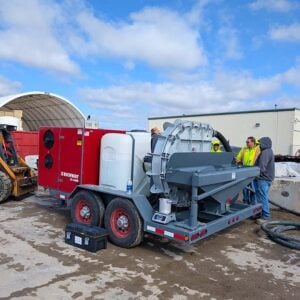
We recently had the pleasure of hosting the team from Veit at our Janesville, Iowa facility for a comprehensive, hands-on demonstration of the Richway CT-100D cellular concrete pump. Veit is a premier name in specialty contracting, civil engineering, and geotechnical construction, and their visit was a textbook example of how forward-thinking contractors approach quality control.
Here is a look inside what we covered during our educational Q & A session, and why hands-on overview is the ultimate risk-mitigation tool for modern construction firms.
The Efficiency Shift: Continuous Production vs. Truck Dosing
A focal point of our discussion with the Veit team was how equipment architecture impacts project economics. Historically, many specialty contractors relied on “truck dosing” to produce lightweight cellular concrete. This involves having a partial load of neat cement slurry delivered by a ready-mix truck, then adding foam directly into the drum on-site. It is a slow, less precise process that ties up trucks and limits production control.
The CT-100D is engineered on an entirely different philosophy: continuous production.
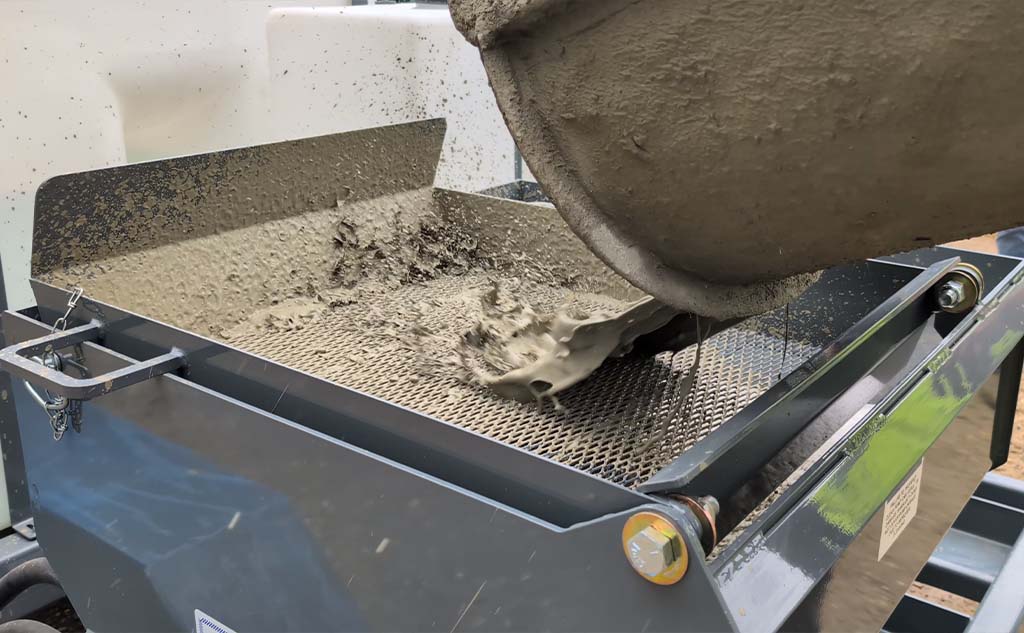
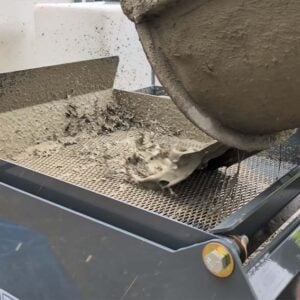
Instead of treating the ready-mix truck as the mixer, contractors can utilize full, loads of slurry (typically 7-8 yards) delivered straight to the job site. The slurry is discharged into the pump’s hopper, and our integrated system injects foam inline as the material is pumped.
The volume expansion is where the math gets incredibly favorable for civil contractors:
One standard 8 yd³ load of cement slurry can yield up to 29 yd³ of 30 PCF finished material.
The system achieves this at production rates up to 100 yd³ per hour.
For a contractor managing tight project schedules, switching from truck dosing to continuous inline production fundamentally changes the speed and profitability of lightweight fill placements.
The Core Practice: Mastering Density and Quality Control
We walked through our precise quality control sequence:
1. Foam Generation and Inline Injection
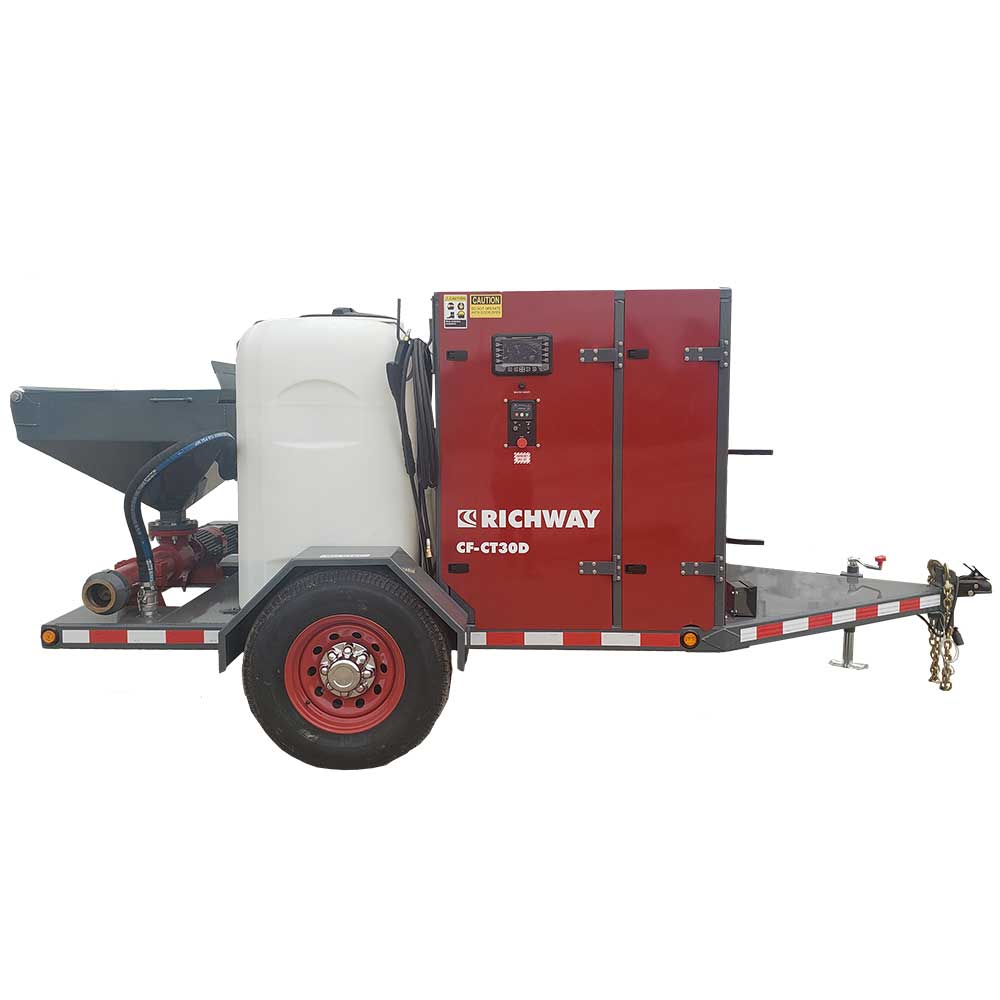
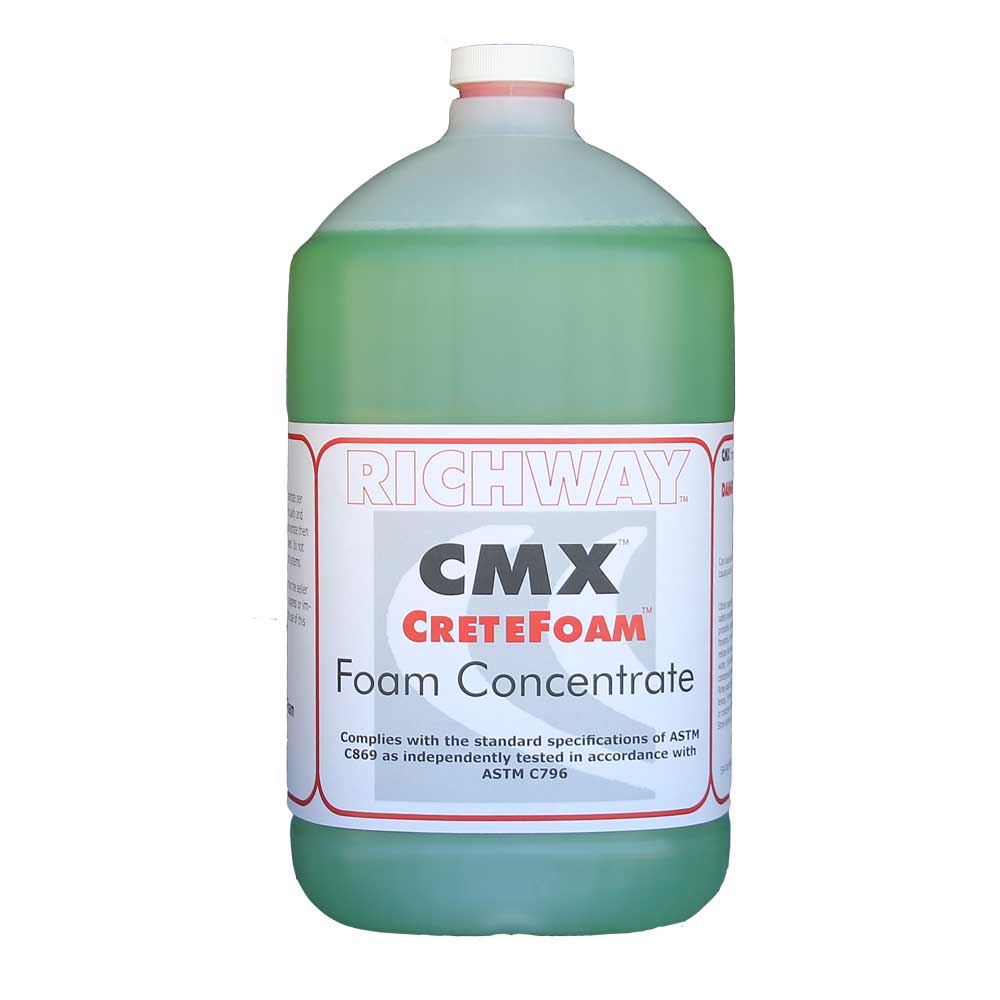
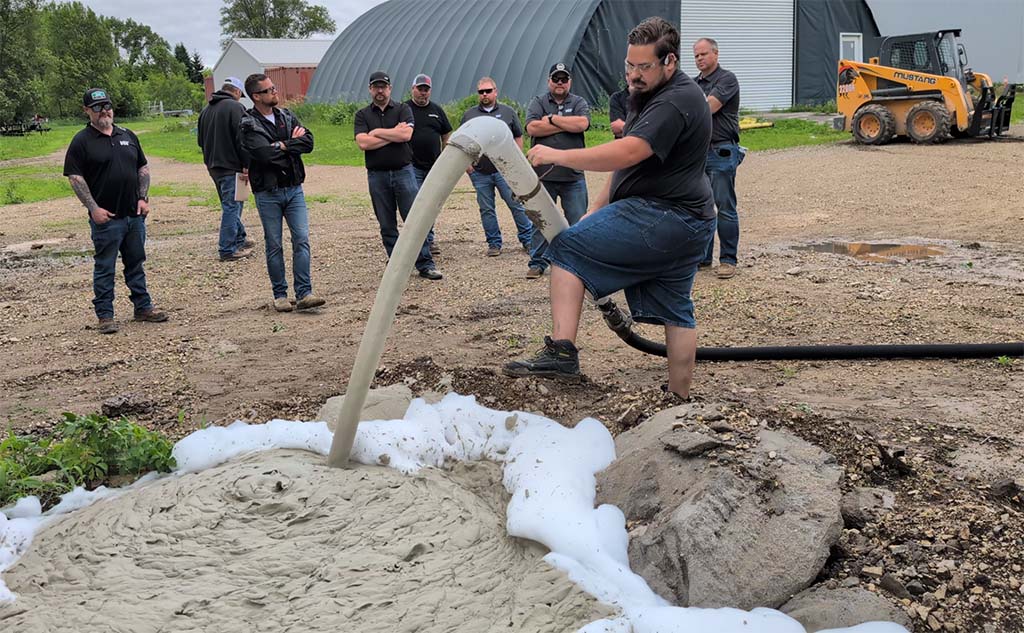
We demonstrated how Richway’s Foam Injection Technology™ accurately blends water, foam concentrate, and compressed air. The CT-100D features an 80 CFM rotary screw air compressor, an 80-gallon concentrate tank, and a 300-gallon water tank all built onto a single trailer unit. This configuration gives operators complete control over the foam structure before it ever meets the slurry.
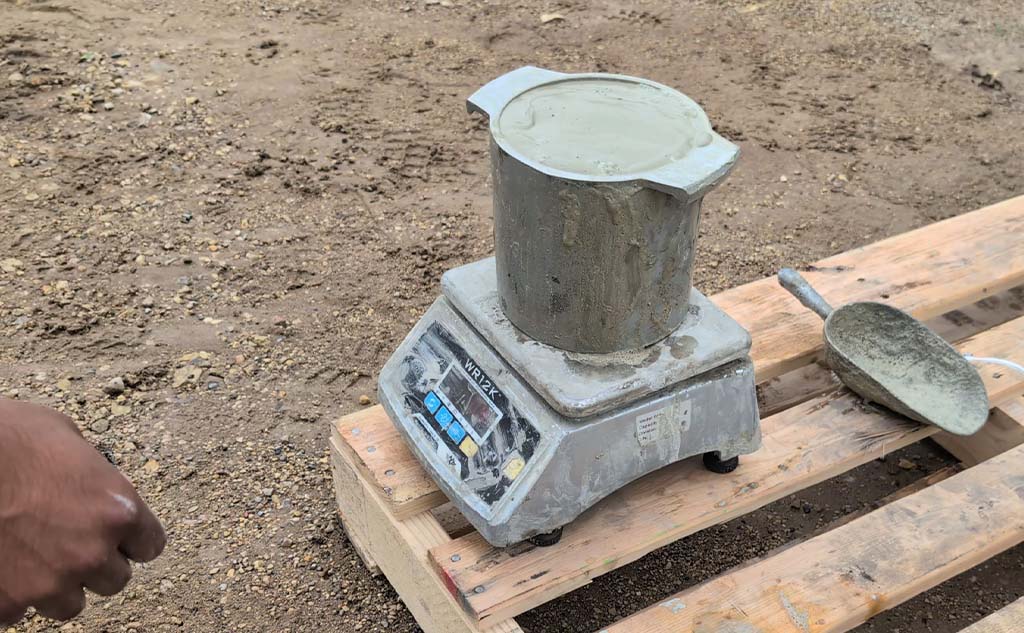
2. The Unit Weight Bucket Weigh-In
We showed the team exactly how to take a physical sample of the cellular concrete from the discharge line and use a standard unit weight bucket to scale and verify the wet density. This is the gold standard for field verification.
3. Real-Time Calibration
Material components change. Ambient temperatures change. Slurry weights can vary slightly from truck to truck. We demonstrated how operators can use Richway’s G2 Control system to make instant, micro-adjustments to the machine’s output on the fly. If a sample comes up slightly heavy or light, the operator can adjust the foam-to-slurry ratio immediately, bringing the material back into perfect spec before it is placed in the ground.
Protecting the Investment: Simplified Field Maintenance
No matter how innovative a piece of equipment is, it will not perform if the field crew hates cleaning and maintaining it. Cement slurry and foam wait for no one, and a difficult clean-out process leads to neglected maintenance and eventual component failure.
During our teardown and clean-out demonstration, we showed the Veit team how we combat this reality. The CT-100D features an open design with a built-in power washer. Because the machine utilizes a robust progressive cavity pump (with an optional 4 inch peristaltic pump configuration), flushing the system and cleaning the hopper requires minimal time and zero specialized tools.
Making maintenance simple ensures that the equipment stays reliable, job after job, protecting the contractor’s capital investment and preventing costly morning downtime.
Real-World Q&A: Solving Geotechnical Challenges
Before and after running the machine, we sat down for an open collaborative session to discuss practical job site scenarios. When dealing with specialized applications like annular space grouting, utility abandonment, or lightweight backfill behind bridge abutments, every project brings unique variables.
Our discussion centered around pumping dynamics. In the concrete pumping world, although the CT-100D’s 125 psi of pumping pressure, may be relativily low, a key to the 100D’s capability to push long distances is the closed loop load sense pressure compensating controls. It ensures slurry and foam flow rates maintain the required setpoints regardless of changing pump conditions, ensuring material density stays consistent.
Being able to talk through these engineering pressures and flow rates with Veit is exactly why we host companies. It allows us to bridge the gap between the mechanical capabilities of our factory floor and the logistical realities of a civil job site.
Partnering for Field Success
At Richway, our relationship with a contractor does not end when the paperwork is signed. Manufacturing reliable, American-made machinery in Iowa is only half the battle. The other half is making sure your team has the technical confidence to execute flawlessly when they pull onto a job site.
We want to give a huge thank you to the team at Veit for spending time with us, asking excellent technical questions, and sharing their field insights.
Ready to Upgrade Your Fleet's Capabilities?
Whether you are a mid-sized specialty contractor looking to break into the lightweight fill market or an established civil firm wanting to move away from inefficient truck dosing, we are here to help. Contact us today to schedule a technical consultation, ask specific equipment questions, or arrange a hands-on training session at our facility.